The Palazzo dell'Archiginnasio was built in 1562-1563 to give the University of Bologna a single home, and it stands beside San Petronio, 284 metres from Piazza Maggiore, about a four-minute walk. The palace is free to enter. The Anatomical Theatre needs a booked ticket: €10 with an audio guide or €12 guided.
The university’s first real home
The University of Bologna dates itself to 1088 and calls itself the oldest university in the Western world. For nearly five centuries it had no building of its own, and teaching was spread across several sites in the city.
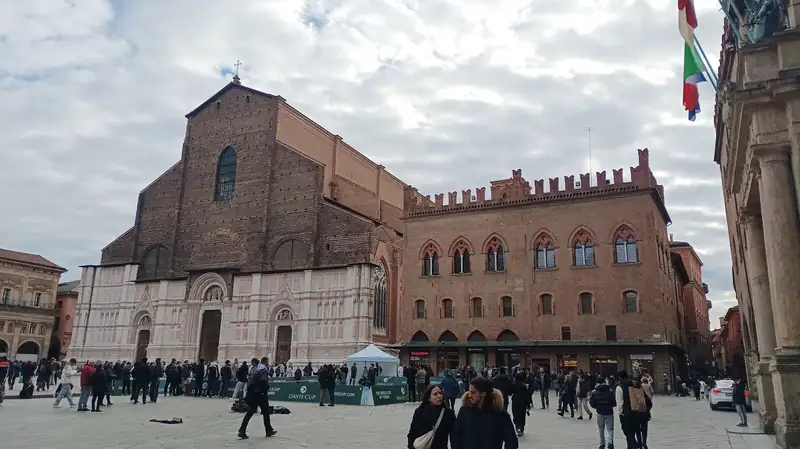
The Archiginnasio fixed that. The papal legate, Cardinal Carlo Borromeo, and his vice-legate Pier Donato Cesi had it built in 1562-1563 to give university teaching a single seat, to a design by the Bolognese architect Antonio Morandi, known as Terribilia. It runs along the flank of San Petronio, under the long Portico del Pavaglione.
It stayed the university’s seat until 1803. After a few years as a primary school, it became the city library in 1838, and it still is. The library itself is for study, not sightseeing. Visitors come for the courtyard, the stairs and two rooms upstairs.
The legend about San Petronio
A popular story says Pope Pius IV had the Archiginnasio built against San Petronio’s flank in 1562 on purpose, to stop the basilica being enlarged until it outgrew St Peter’s in Rome. Recent historical research disputes that and points to money and planning problems as the real reasons the basilica was never finished. Guides still tell the legend, so now you know both versions. The San Petronio page has the rest of the story.
Thousands of coats of arms
Walk in from the portico and look up. Every wall of the courtyard, the loggias and the staircases is covered with painted and carved coats of arms. The official site counts about 6,000 of them, placed between the building’s construction and the end of the eighteenth century, and calls it the largest heraldic wall decoration anywhere.
This part costs nothing. The palace is free to enter Monday to Saturday from 09:00 to 19:00.
The Anatomical Theatre
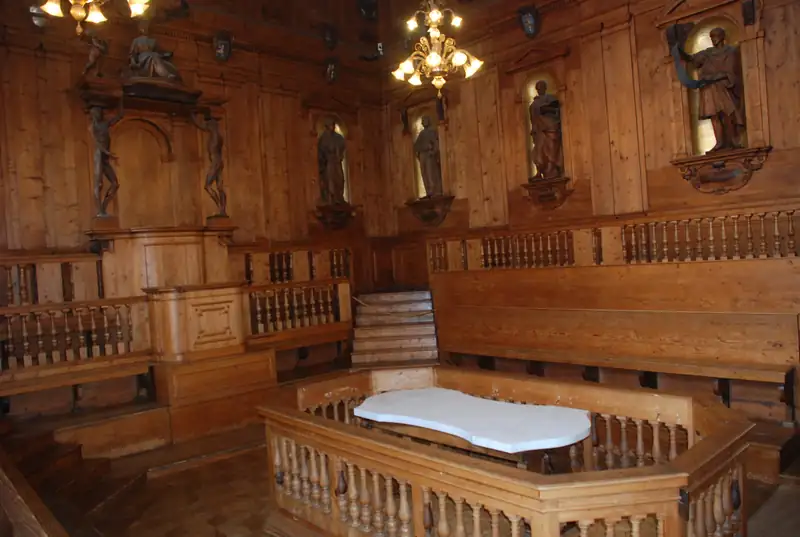
Upstairs is the room most people come for. The Teatro Anatomico was designed in 1637 by Antonio Paolucci, called il Levanti, for anatomy lessons. It is built of fir wood, with tiers of wooden benches around a white table in the middle, under a coffered ceiling added in 1645 with Apollo at its center.
Statues of famous physicians and Bologna anatomists line the walls. Beside the lecturer’s chair stand two flayed figures, the spellati, carved in 1734 to a design by Ercole Lelli.
The bombing of 29 January 1944 wrecked the theatre. It was rebuilt soon after the war, using the original wooden sculptures pulled out of the rubble, so the statues you see are the originals.
Your ticket also covers the Sala dello Stabat Mater, the old lecture hall of the law students, named after the performance there on 18 March 1842 of Rossini’s Stabat Mater, conducted by Donizetti.
Tickets and booking
Booking is mandatory for the Anatomical Theatre and the Sala dello Stabat Mater. Bologna Welcome sells two kinds of visit, with these prices as of October 2026:
Reduced tickets cover ages 13 to 18, university students with ID and over-65s. The guided visit may also include the Cappella di Santa Maria dei Bulgari and the Cubiculum Artistarum when they are not in use.
Older guides quote a €3 entry. That price is out of date.
The palace has step-free access from Via de’ Foscherari 2, with a lift.
How to get there from Piazza Maggiore
It is 284 metres, about four minutes on foot. From the square, walk past the left side of San Petronio as you face its facade and continue under the Portico del Pavaglione, the long arcade along the basilica’s flank. The Archiginnasio’s entrance is on this portico, facing Piazza Galvani.
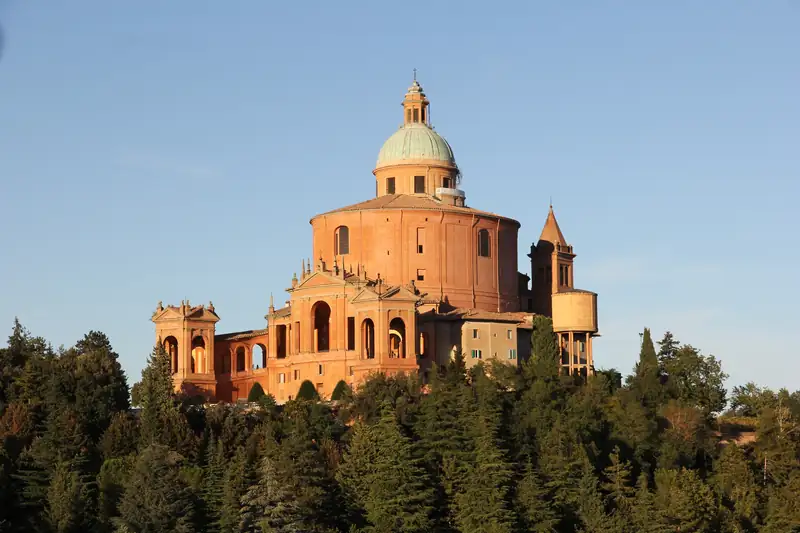
Piazza Galvani is also where the San Luca Express tourist train leaves for the Sanctuary of San Luca, so the two pair well on one day.
Tips
- Audio-guide entries run every 10 minutes, so you can pick a time that suits you rather than wait for a tour.
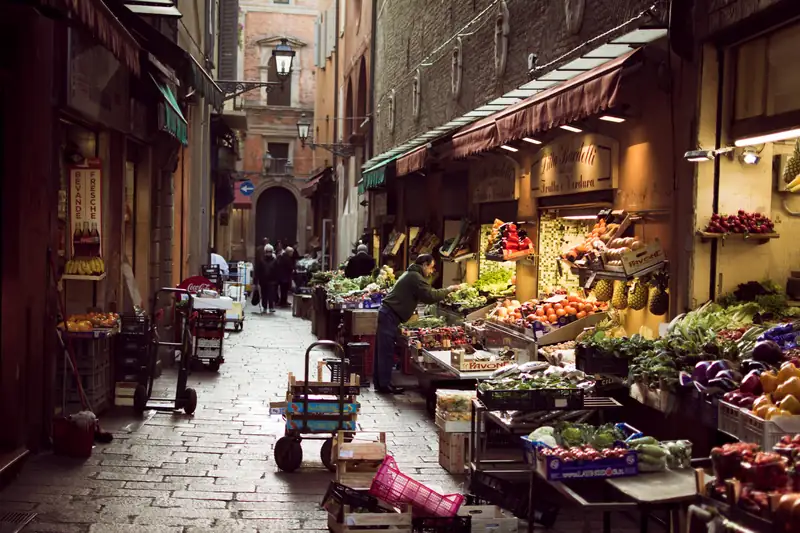
- The Anatomical Theatre is closed on Sundays. If Sunday is your only day, do San Petronio and the Quadrilatero market streets instead.
- Several walking tours from Piazza Maggiore include the courtyard. Only some go into the theatre, so check before you book.
- Staying close by makes an early slot easy. See our guide to where to stay in Bologna.