Bologna: Historic Center Walking Tour
2 hours
A guided loop through the medieval streets of the old town that ends up on Piazza Maggiore itself.
from$76
Check availability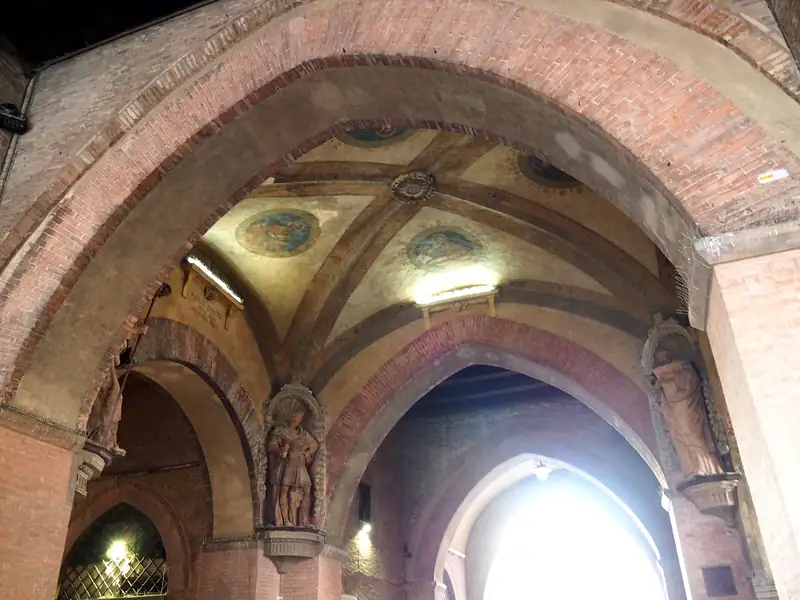
Piazza Maggiore, Bologna
Palazzo del Podestà runs along the north side of Piazza Maggiore. Underneath it, the Voltone del Podestà is a vaulted crossing where a whisper into one corner is heard clearly in the corner diagonally opposite. It is free, open at all hours, and most people walk through without trying it.
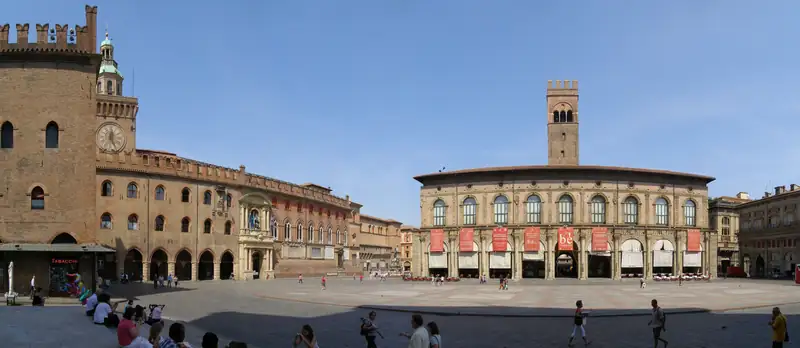
The long, arcaded building along the north side of Piazza Maggiore was the seat of the podestà, the chief magistrate brought in from outside the city to govern it without local loyalties. It went up around 1200, at the same time the square itself was being cleared.
What you see now is not what a medieval Bolognese saw. Giovanni II Bentivoglio commissioned a remodel in 1453 and the architect Aristotile Fioravanti gave the building its Renaissance front: regular arches, pale stone, nothing of the fortified look the original had.
The interior halls open occasionally for exhibitions. Most of the time the building is closed and the reason to come is what runs underneath it.
Walk under the middle of the building and you are in a double-arched vaulted crossing linking Piazza Maggiore to Piazza Re Enzo behind. In 1525 terracotta statues of Bologna’s four patron saints, Petronius, Proculus, Dominic and Francis, were set into it by Alfonso Lombardi. They are still there, high up in the corners, and are easy to miss because everyone is looking at their feet.
Then there is the trick. Stand facing one of the four corners of the crossing, close to the wall, and speak quietly into it. A person standing in the corner diagonally opposite, across the full width of the passage with people walking between you, hears you as if you were next to them. The curve of the vault carries the sound around the edge.
It works. It also fails completely if the passage is full of people talking, which is most of the middle of the day.
Guides in the square will tell you the acoustics were used so plague sufferers could confess without infecting the priest. We have not found a single historical source for that. It gets repeated because it is a good story, so treat it that way.
Above the junction of Palazzo del Podestà and Palazzo Re Enzo sits the Torre dell’Arengo. A wooden tower was raised here in 1212 and rebuilt in brick in 1259 by Alberto di S. Pietro. It now stands about 47 meters tall on a base of 9 meters by 7.46 meters.
Its bell is the reason it exists. Known as the Campanazzo or Campanone, recast in bronze in 1453 by the same Aristotile Fioravanti who did the facade, and weighing roughly 47 quintals, about 12,000 pounds. It was rung to summon the citizens to the arengo, the public assembly. When it went, everyone in the city knew something was happening.
Directly behind the Podestà, facing its own small square, stands the Gothic palace that draws the second-best story on the piazza.
It was built between 1244 and 1246 as an extension of Palazzo del Podestà and originally called the Palatium Novum, the new palace. Five years later it acquired a resident it did not plan for. Enzo of Sardinia, illegitimate son of the Holy Roman Emperor Frederick II, was captured by Bolognese forces at the Battle of Fossalta in 1249 and held here until his death in 1272. Twenty-three years.
Legend adds that he could move freely around the building by day but was locked into a cage suspended from the ceiling at night, and that he fathered children during the captivity, possibly including an ancestor of the Bentivoglio family who later ruled the city. The cage and the children are legend rather than record.
The Sala dei Trecento, the Hall of the Three Hundred, was finished in 1386 as the city archive. The palace was restored in 1771 and again in 1905, and it is the 1905 work that gave it the Gothic-revival face it wears today.
There are no fixed opening hours. It hosts exhibitions and events rather than working as a museum, so whether you can go in depends entirely on what is running. Check palazzoreenzo.com first.
2 hours
A guided loop through the medieval streets of the old town that ends up on Piazza Maggiore itself.
from$76
Check availability2 hours
An affordable two-hour orientation walk covering the landmarks of the centre, and the most-reviewed tour in Bologna.
from$33
Check availabilityPrices and ratings were taken from GetYourGuide and can change. Booking through these links supports this site at no extra cost to you.
It is the Voltone del Podestà, the vaulted passage under Palazzo del Podestà linking Piazza Maggiore to Piazza Re Enzo. Face one of the four corners of the crossing and speak quietly, and someone in the diagonally opposite corner hears you clearly. The sound travels along the curve of the vault.
No. The Voltone is a public passage that stays open at all hours and there is no ticket. You do need a second person, and you need the passage to be reasonably quiet for it to work.
There is no historical source for it. Local guides say the acoustics let plague sufferers confess to a priest without infecting him, and it is repeated everywhere, but we could not find anything behind it. Enjoy it as folklore.
Enzo of Sardinia was an illegitimate son of the Holy Roman Emperor Frederick II. Bologna captured him at the Battle of Fossalta in 1249 and held him in the palace that now carries his name until he died in 1272, 23 years later.
Only when something is on. It has no fixed visiting hours and works as an event and exhibition venue rather than a museum, so check palazzoreenzo.com before you plan around it. Otherwise treat it as an exterior.
The bell tower rising above the junction of the two palaces. A wooden tower of 1212 was rebuilt in brick in 1259 and now stands about 47 meters tall. Its bell, the Campanone, was recast in bronze in 1453 and was rung to call citizens to public assembly.
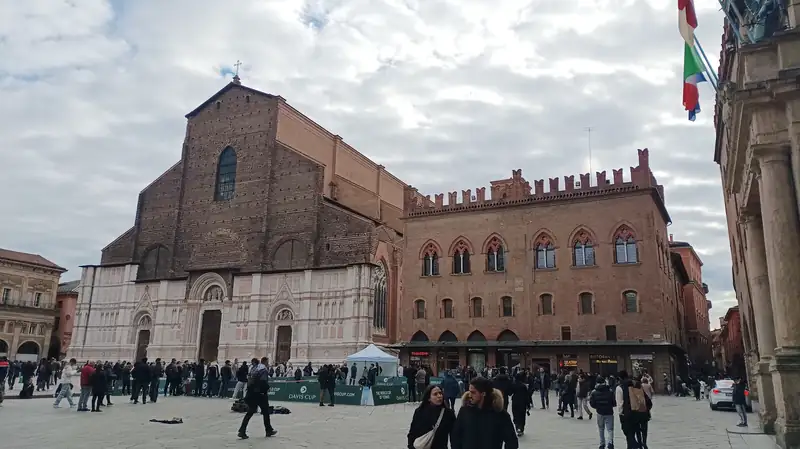
The Basilica di San Petronio fills the south side of Piazza Maggiore.
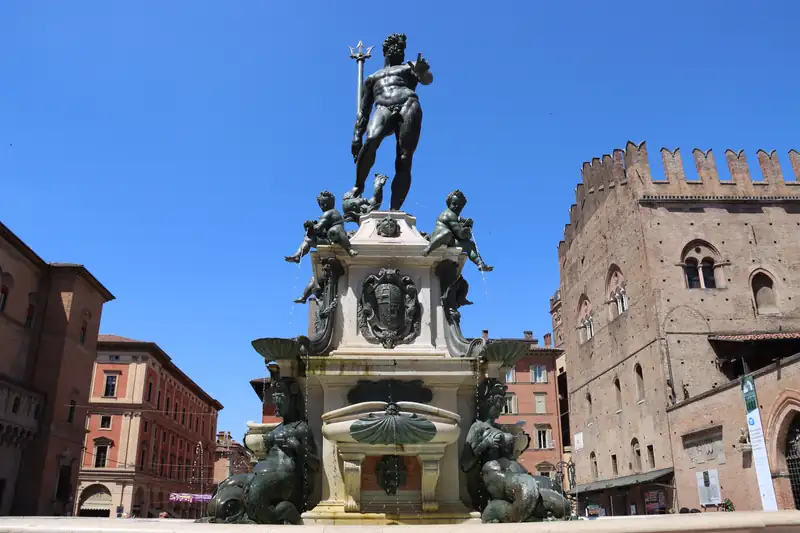
The Fontana del Nettuno stands at the northwest corner of Piazza Maggiore, on the small square named after it.
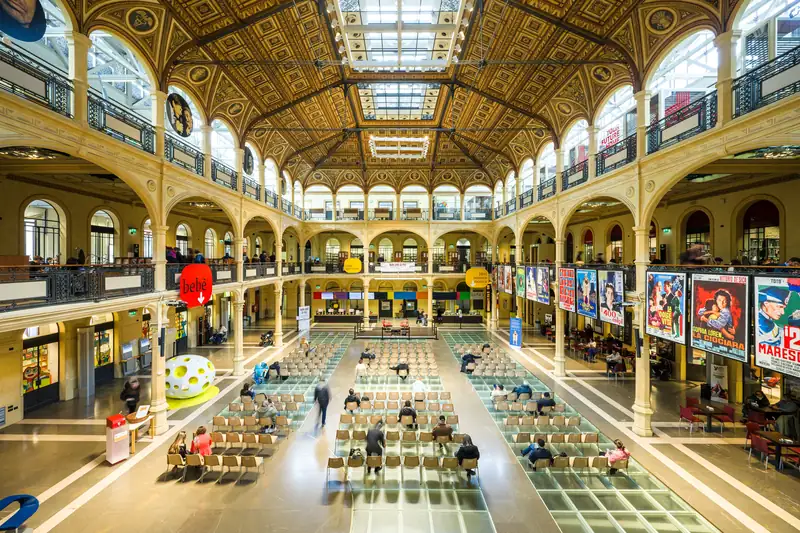
Biblioteca Salaborsa is Bologna's public library, built inside the city's former stock exchange on Piazza del Nettuno.
Almost everything worth seeing in Bologna sits within a fifteen-minute walk of Piazza Maggiore.