Bologna Walking Food Tour with a Local Expert
3 hours
The city's best-reviewed food walk, led by a Bolognese guide who explains what you are eating and why it matters here.
from$83
Check availability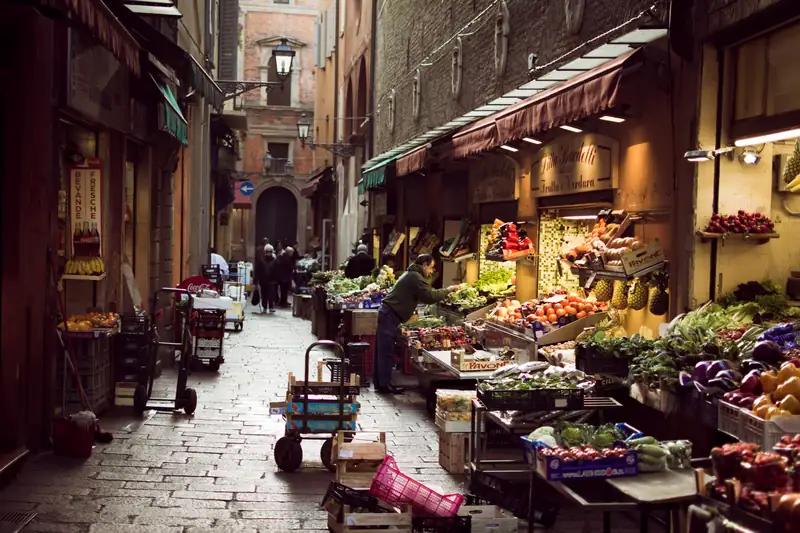
The food is behind the square rather than on it. Walk through one of the big arches in Palazzo dei Banchi and you land in the Quadrilatero, four narrow market streets full of delis, pasta shops and stalls. This is where to go, what to order, and how not to end up with the tourist version.
There is almost nothing to eat on Piazza Maggiore itself. That is not a complaint. The square is ringed by civic buildings and the Basilica di San Petronio, and the food starts about thirty seconds behind it.
Walk to the east side, find one of the two larger arches in the arcade of Palazzo dei Banchi, and go through. You come out in the Quadrilatero.
Four narrow streets make up Bologna’s historic open-air market: Via Pescherie Vecchie, Via Drapperie, Via Clavature and Via Caprarie. They have been trading in food since the medieval city, and they still hold the densest concentration of delis, pasta shops, fishmongers and market stalls in the historic center.
It is loud, it is tight, and it is genuinely still a working market rather than a preserved one, though the tourist-facing end of it is real too. Some windows are aimed at you. The trick is knowing which counters the city itself uses.
Tortellini in brodo. Small hand-folded parcels, traditionally filled with pork loin, prosciutto, mortadella, Parmigiano and nutmeg, served in capon or beef broth. It is the festive dish rather than the everyday one, and Bologna takes it seriously enough that the Dotta Confraternita del Tortellino registered an official filling recipe with the city’s Chamber of Commerce on 7 December 1974.
Tagliatelle al ragù. Flat egg pasta with the slow-simmered meat sauce. This is the everyday counterpart to tortellini and the dish most visitors arrive looking for under a different name. The ribbons matter: they carry the sauce in a way that thin round pasta does not.
Mortadella. The big pink pork cold cut with white cubes of fat through it, sliced thin. It gave the English word baloney its name, and its modern codification is credited to the nineteenth-century food writer Pellegrino Artusi. Buy it by weight from a deli counter and eat it standing up.
Crescentine or tigelle. Small grilled or fried rounds of bread, split open and filled with cured meats and squacquerone or crescenza cheese. Strictly this is an Emilian specialty shared with the wider region rather than Bologna’s alone, but the city serves it everywhere.
Lambrusco and Pignoletto. The two regional wines to drink with all of the above. Lambrusco is usually a lightly sparkling red, which surprises people who only know the sweet export version. Pignoletto is a white, still or sparkling, including the Colli Bolognesi DOCG.
Everything here is a few minutes from the square. Hours change and businesses come and go, so check before making a special trip.
Osteria del Sole, Vicolo Ranocchi 1. Reputed to have been trading since 1465, which would make it Bologna’s oldest osteria. It sells wine and beer and nothing else, no food at all. You buy your lunch at a deli around the corner, carry it in, and eat it at the communal tables with a glass in front of you. Monday to Saturday 10:00 to 21:30, closed Sunday. It is the single most Bolognese thing you can do in an hour.
Mercato di Mezzo, Via Clavature 12. A covered food hall inside the Quadrilatero with separate counters for piadina, fried food, cured meats and wine by the glass. Open daily, roughly 8:30 to midnight, which makes it the fallback when everything else is shut. Busy, functional, good for a fast lunch.
Tamburini, Via Caprarie 1. A historic delicatessen and eat-in gastronomia, run by the same family since 1932 with roots going back to 1860. Cold cuts, cheese, fresh pasta. This is the counter to buy mortadella from.
Paolo Atti & Figli, Via Drapperie 6, with a second counter at Via Caprarie 7. A bakery and pasta shop trading since 1868, known for fresh tortellini and traditional Bolognese bread. Worth going in even if you are not buying.
Salumeria Simoni, Via Pescherie Vecchie. Family-run since the 1960s, specializing in cured meats, fresh pasta and cheese. Source numbers vary between 3B and 7C, so look for the name rather than the number.
Zerocinquantino, Via Pescherie Vecchie 3/e, with a second outlet directly on Piazza Maggiore. A small Bolognese chain founded in 2009 doing crescentine and tigelle with a long list of fillings. Cheap, quick, and the piazza branch is the rare food option actually on the square.
Osteria Angolo degli Orefici, Via degli Artieri 1g. A trattoria that opened in 2020 in the Quadrilatero, serving the classics: lasagne, tortellini, tagliatelle al ragù, boards of cold cuts. Book for dinner.
Enoteca Italiana, Via Marsala 2/B. A wine shop and bar since 1972, strong on regional labels including Pignoletto and Lambrusco, with light food alongside. Note that Via Marsala is a few minutes further out than the rest of this list, so budget the extra walk.
VERO, Via Rizzoli. A takeaway gelato counter, made at the brand’s own lab on Via Ugo Bassi. No seating, so eat it walking back toward the Due Torri.
One correction worth knowing: Cremeria Funivia comes up in older write-ups as a nearby gelateria. It rebranded as Cremeria Cavour and is based on Piazza Cavour, a separate square further out than everything above. Good, but not a three-minute walk.
A few things that save confusion.
Delis and market shops are mostly counters, not restaurants. You point, they weigh, you pay, you eat standing or take it away. That is the normal way to have lunch here and nobody will think it odd.
Osteria del Sole is the exception that proves the pattern: bring the food to the wine, not the other way round. Buy at Tamburini or Simoni first, then walk in.
Sit-down dinner in the center fills up, particularly Friday and Saturday. Book a table, or turn up early in the evening ahead of the local dinner rush.
Ask for tagliatelle al ragù rather than the name you know from home, and you will get the version the city actually cooks.
Aperitivo is a real fixture here rather than a tourist add-on. In the early evening the piazza and the streets around it fill up with people having a glass before dinner, and a Pignoletto or a Lambrusco is the local way to join in.
The Quadrilatero rewards knowing which door to open, and three hours with someone who eats there weekly gets you further than three days of guessing. A walking food tour covers the market shops and the dishes in one go, and a pasta class sends you home able to make the thing rather than only remembering it.
Both are more useful at the start of a trip than the end. Once you know what you like, the rest of the visit gets easier, and the Quadrilatero is a very short walk back.
Last updated 9 September 2026.
3 hours
The city's best-reviewed food walk, led by a Bolognese guide who explains what you are eating and why it matters here.
from$83
Check availability2 hours
Two hours of tasting your way through the lanes just off the square, stopping at counters locals actually use.
from$66
Check availability3 hours
A longer walk built around a full traditional meal rather than a string of small tastings.
from$95
Check availability3 hours
Roll your own fresh pasta, cook a ragù, and finish with wine and gelato in a hands-on class.
from$86
Check availabilityPrices and ratings were taken from GetYourGuide and can change. Booking through these links supports this site at no extra cost to you.
Tortellini in brodo, tagliatelle al ragù and mortadella are the three the city is built on. Add crescentine or tigelle with cured meats and soft cheese, and a glass of Lambrusco or Pignoletto to go with any of it.
Not in the form most visitors know. The local dish is tagliatelle al ragù, flat egg pasta with a slow-cooked meat sauce, and the wide ribbons hold the sauce in a way spaghetti does not. Order it by its proper name and you will get the real version.
The Quadrilatero, immediately behind Palazzo dei Banchi on the east side of the square. Via Pescherie Vecchie, Via Drapperie, Via Clavature and Via Caprarie form the historic market and still hold the densest run of delis, bakeries and stalls in the historic center.
A wine bar on Vicolo Ranocchi that has reportedly been trading since 1465. It sells only wine and beer, no food at all, and customers bring their own from the delis around the corner and eat at the communal tables. Open Monday to Saturday 10:00 to 21:30, closed Sunday.
For a sit-down dinner in the center, yes, especially Friday and Saturday. The market shops and food hall counters work on a walk-up basis, so lunch is easier to improvise than dinner.
Mercato di Mezzo on Via Clavature opens daily, which makes it the reliable Sunday option a minute from the square. Osteria del Sole is closed on Sundays, and hours across the Quadrilatero are less predictable that day, so check before setting out.
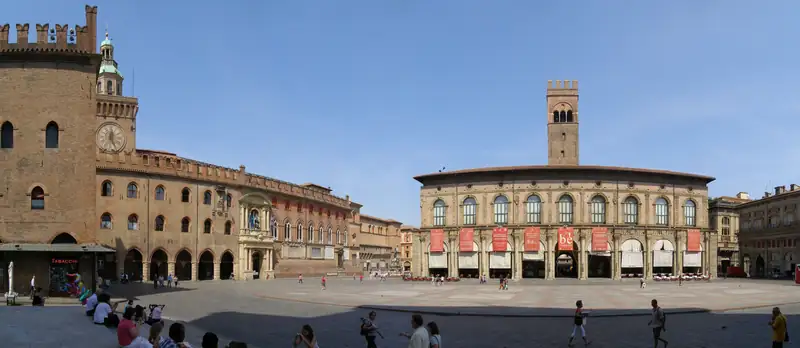
Almost everything worth seeing in Bologna sits within a fifteen-minute walk of Piazza Maggiore.
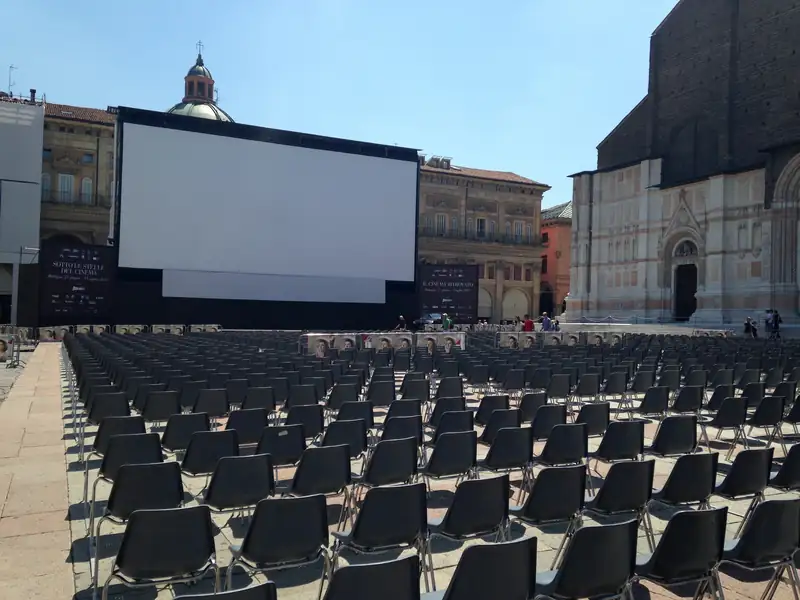
Mid-April to mid-June and September to October are the most comfortable times to be in Bologna.
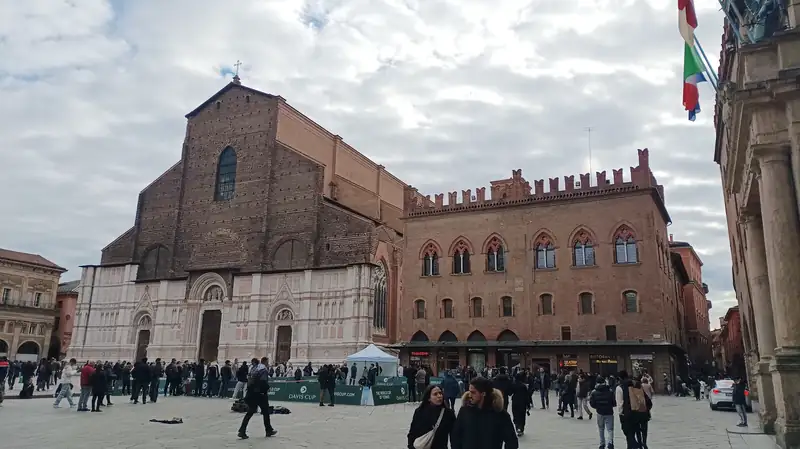
The Basilica di San Petronio fills the south side of Piazza Maggiore.
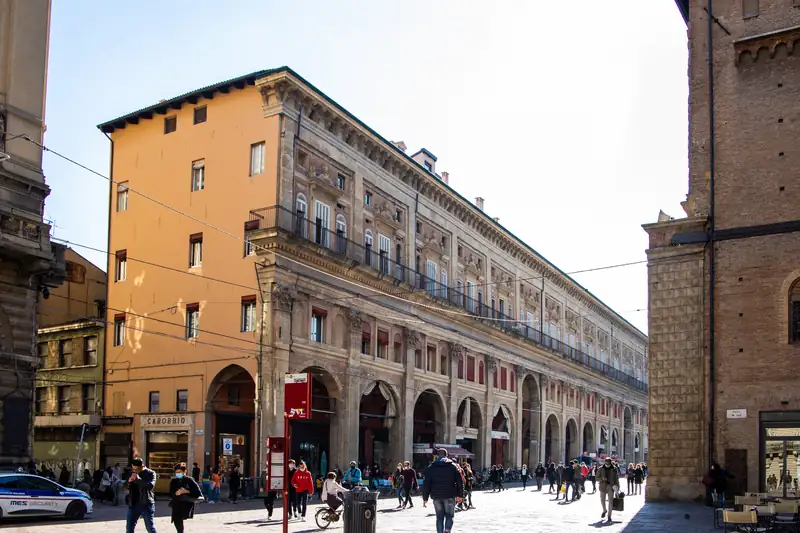
Piazza Maggiore is about 1.2 to 1.5 km from Bologna Centrale station, a flat 15 to 20 minute walk almost entirely under porticoes.