Bologna Walking Food Tour with a Local Expert
3 hours
The city's best-reviewed food walk, led by a Bolognese guide who explains what you are eating and why it matters here.
from$83
Check availability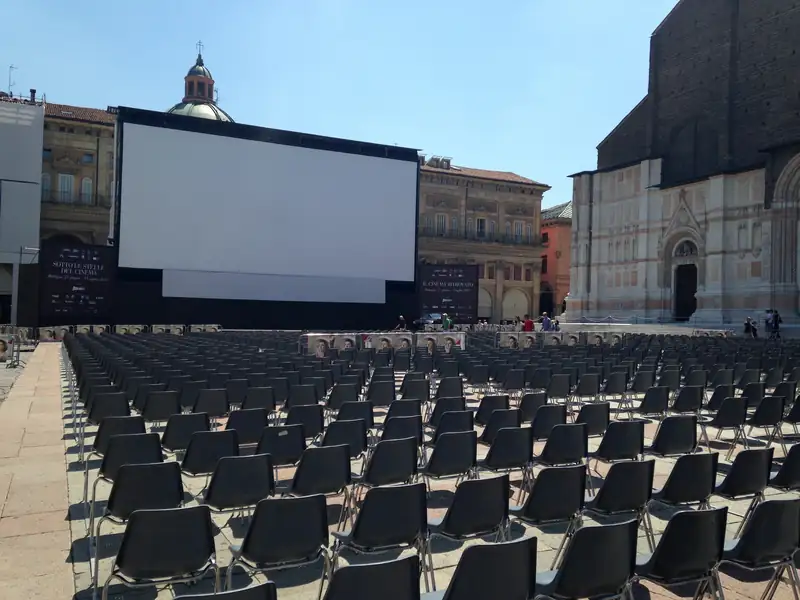
Mid-April to mid-June and September to October are the most comfortable times to be in Bologna. Summer is hot and humid in the Po Valley, winter is cold and often foggy, and November is the wettest month. The square itself is quietest before nine in the morning, whatever the season.
If you want one answer: come in May or September.
Mid-April to mid-June and September to October are the two windows where Bologna’s weather cooperates and the square is usable at any hour of the day. Everything below explains what you get the rest of the year, because the rest of the year is not off limits, it just needs planning.
Bologna sits in the Po Valley, which gives it a humid, semi-continental climate rather than the Mediterranean one people expect from Italy. Winters are cold and damp with fog and frost. Summers are hot and muggy. November, not any of the winter months, is the wettest.
Average daily lows and highs, on a 1991 to 2020 baseline:
| Month | Avg low | Avg high |
|---|---|---|
| January | -0.2 °C | 7.2 °C |
| February | 0.7 °C | 9.9 °C |
| March | 4.3 °C | 15.2 °C |
| April | 8.1 °C | 19.1 °C |
| May | 12.7 °C | 24.0 °C |
| June | 17.0 °C | 28.6 °C |
| July | 19.3 °C | 31.5 °C |
| August | 19.2 °C | 31.4 °C |
| September | 14.9 °C | 25.8 °C |
| October | 10.8 °C | 19.3 °C |
| November | 5.7 °C | 12.8 °C |
| December | 0.8 °C | 7.7 °C |
March is still unreliable and April can be either. From mid-April onward the city works properly: highs in the high teens climbing through the twenties, the piazza in use in the evenings, and the university still in term until May, which keeps the student population in the center. This is the best all-round window, and it is also when walking and food tours are most pleasant to be on.
Hot and humid, with average highs a shade over 31 °C in both months and the Po Valley air making it feel heavier. Midday in the open square is genuinely unpleasant.
The workaround is structural rather than seasonal. Use the mornings and the evenings outside, and put the indoor sights in the early afternoon: the nave of San Petronio, the Salaborsa glass floor, the museums. Bologna’s porticoes were built for shade as much as rain, and they make the walking bearable.
August is its own case. Many locals leave, some family-run shops shut for a stretch, and visitor numbers hold steady. The city is quieter and slightly emptied out, and the open-air cinema is at full swing.
September is close to perfect: highs around 25.8 °C and the worst of the heat gone. October is cooler and still good, with highs around 19 °C.
November is when it turns. Highs drop to about 12.8 °C, and it is the wettest month of the year. That does not rule it out, and the porticoes make Bologna one of the better European cities to be rained on in, but it is not a month for sitting on the crescentone.
Cold, damp and often foggy, with January averaging a high of 7.2 °C and lows around freezing. Bologna in fog is genuinely atmospheric, and the center gets Christmas lights and market stalls, but daylight is short and outdoor time is limited.
The upside is that this is when the sights are emptiest. The clock tower at Palazzo d’Accursio and the museums are bookable at short notice, and restaurants have tables.
Sotto le stelle del cinema, mid-June to mid-August. The Cineteca di Bologna and the city turn Piazza Maggiore into a free open-air cinema for around 57 evenings. The 2026 edition ran 15 June to 14 August, overlapping the 40th edition of the Il Cinema Ritrovato festival. Programs are set annually, so check cinetecadibologna.it for current dates. This is the single best reason to accept the summer heat.
Bologna Estate, through the summer. The city’s umbrella cultural program, which includes the open-air cinema along with concerts and events spread across the city. Listings at bolognaestate.it.
Christmas markets, roughly November into late December. The Fiera di Santa Lucia is Bologna’s main Christmas market, though its historic home is under the Portico dei Servi on Strada Maggiore rather than on Piazza Maggiore itself. In recent years it has run from early or mid-November to 26 December. We could not confirm the current year’s dates from an official source, so check locally before planning around it. Antiques and Christmas stalls have also been reported at the Voltone del Podestà in December, which we have likewise not been able to confirm.
Cioccoshow, Bologna’s chocolate festival, historically used Piazza Maggiore but has reportedly moved to Piazza XX Settembre in recent years. Check cioccoshow.it rather than assuming it is still on the main square.
Time of day changes the square more than the season does.
Before nine in the morning it is close to empty, and this is when to photograph the Neptune Fountain and the basilica facade without people in the shot. The light on the marble is also better then and again in the last hour before sunset.
Midday and Saturday afternoon are the busiest. Friday and Saturday evenings fill the piazza with people out for aperitivo, which is worth seeing rather than avoiding, just not if you came for quiet.
Weekday evenings sit in between: lively enough to feel like a city using its own square, calm enough to hear yourself. In high summer, late afternoon into evening is simply the more comfortable time to be outdoors at all.
One scheduling note that catches people out: the clock tower and the municipal art collections at Palazzo d’Accursio close on Mondays, as do several other museums in the center. Build Monday around the square, the Quadrilatero and the churches instead.
Last updated 9 September 2026.
3 hours
The city's best-reviewed food walk, led by a Bolognese guide who explains what you are eating and why it matters here.
from$83
Check availability2 hours
Two hours of tasting your way through the lanes just off the square, stopping at counters locals actually use.
from$66
Check availabilityPrices and ratings were taken from GetYourGuide and can change. Booking through these links supports this site at no extra cost to you.
May and September are the two we would pick. Both sit in the comfortable window either side of the Po Valley summer, with average highs in the mid twenties Celsius and long usable evenings. Mid-April to mid-June and September to October are the broadly recommended stretches.
It can be. July and August average highs of 31.5 and 31.4 degrees Celsius, and the Po Valley is humid, which makes it feel heavier than the number suggests. The porticoes help, the piazza at midday does not. Plan indoor stops for the early afternoon and save the square for the evening.
Before about nine in the morning. The square and its porticoes are busiest around midday and on Saturday afternoons, and Friday and Saturday nights fill up with people out for aperitivo. Early on a weekday you can photograph the fountain and the basilica facade with nobody in the frame.
The main fixture is Sotto le stelle del cinema, free open-air film screenings that run from mid-June to mid-August. In 2026 the season ran 15 June to 14 August. The square also hosts markets, concerts and public gatherings through the year, and it is where the city goes to watch a football final.
It is the trickiest month. The heat peaks, many Bolognesi leave the city, and some family-run shops close for part of the month while tourist numbers stay steady. If you do come in August, the open-air cinema is running and the city is at its emptiest, which some people prefer.
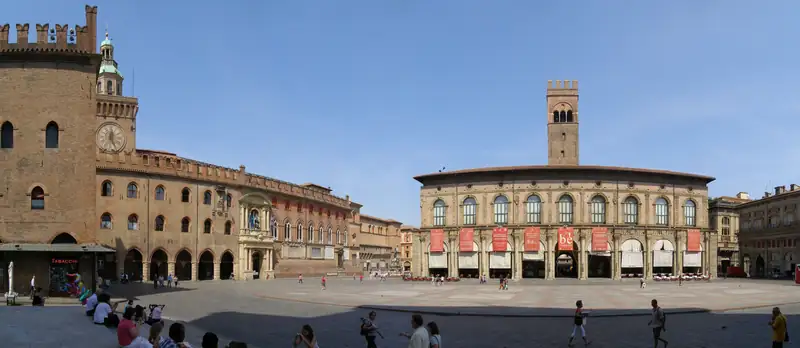
Almost everything worth seeing in Bologna sits within a fifteen-minute walk of Piazza Maggiore.
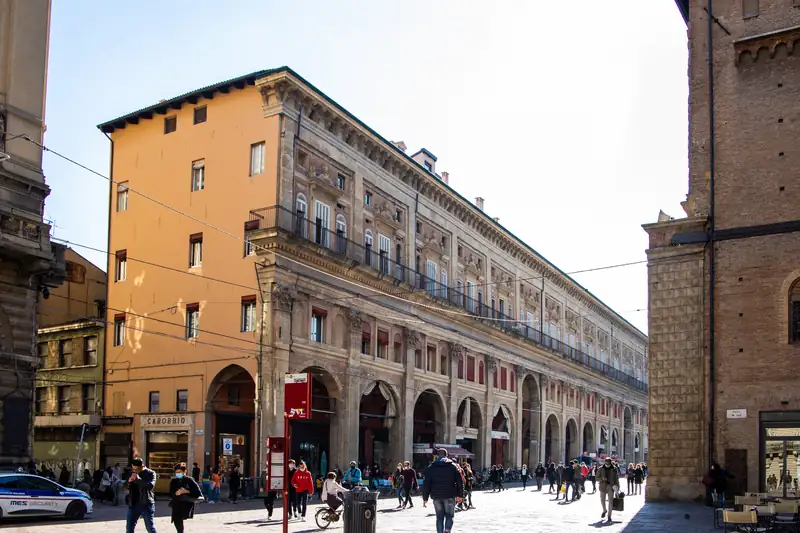
Piazza Maggiore is about 1.2 to 1.5 km from Bologna Centrale station, a flat 15 to 20 minute walk almost entirely under porticoes.
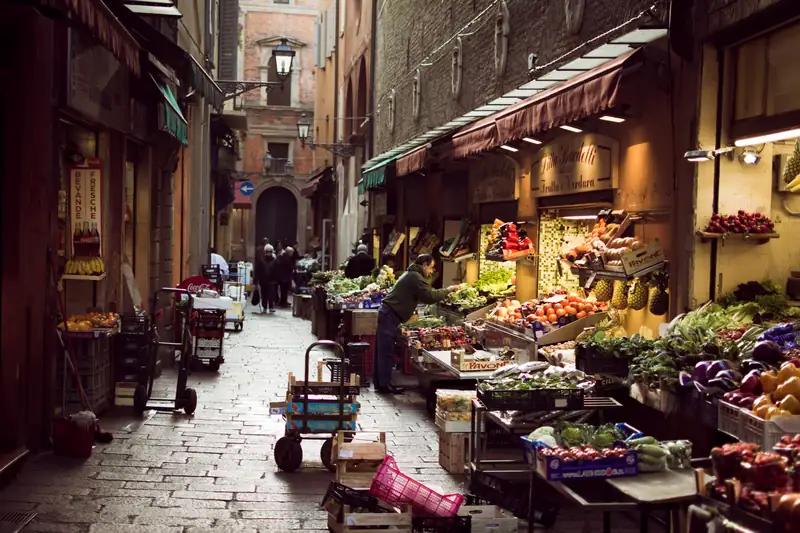
The food is behind the square rather than on it.
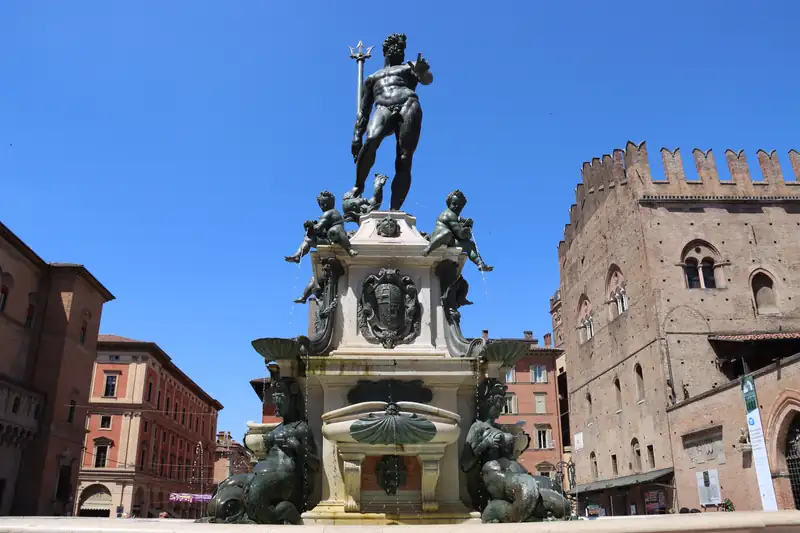
The Fontana del Nettuno stands at the northwest corner of Piazza Maggiore, on the small square named after it.